Château de Langlard
Langlard Castle
Mazerier
Visit
Hours to be confirmed
- Where
- Mazerier
Hours and prices not verified at the source yet.
To make a day of it
Open within 20 km
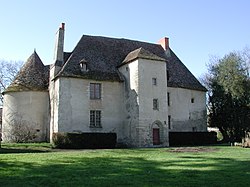
Château de Langlard stands in Mazerier (Allier), in the Auvergne-Rhône-Alpes region of France. The building is registered as a historic monument (dating recorded in the Mérimée database: 15th century). Its opening hours and prices have not been verified at the source yet.
In Mazerier, in the Allier department, the Château de Langlard stands on a feudal mound overlooking the Limagne plain, at the northern edge of the village. Built mainly in the 14th and 15th centuries over the remains of a 13th century fortress, it retains two round towers, a square tower and a hexagonal tower housing a spiral staircase. The main point of interest is the chapel in the east tower, which still holds a late 15th century mural of the Last Judgement. The place is also remembered for a visit by the Marquise de Sévigné, hosted here by Abbé Bayard in 1676.
Written from Château de Langlard
Where this château is
Mazerier · Allier · Auvergne-Rhône-Alpes
Loading the map…
This châteauChâteaux within 40 km
Address
03800 Mazerier
Directions open from wherever you are, by car or public transport.
4.5 / 5from 27 Google reviews
- Period of construction
- 15th century
Base map © IGN, Géoplateforme
Something wrong here?
Tell us. Every report moves this entry up our verification queue.
Sources
Identity, location and official references from Wikidata and the Mérimée register.
- This entry in Markdown
- Wikidata Q2969641
- Mérimée PA00093151
Within an hour’s drive
 Château de La Motte-Mazerier (Motte-Mazerier Castle)Mazerier · Allier
 Château de Beauverger (Beauverger Castle)Saulzet · Allier
 Château de Gannat (Gannat Castle)Gannat · Allier
 Château de Jenzat (Jenzat Castle)Jenzat · Allier
- Château de la Fauconnière (Fauconnière Castle)Menomblet · Vendée
- Château de la Fauconnière (Fauconnière Castle)Gannat · Allier


