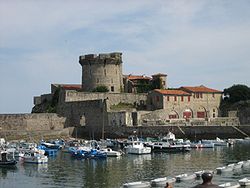
Château d'Eliçabéa
Eliçabéa Castle
Trois-Villes
Access
No visits on recordNo opening hours or ticketing found
- Where
- Trois-Villes
To make a day of it
Château d'Eliçabéa stands in Trois-Villes (Pyrénées-Atlantiques), in the Nouvelle-Aquitaine region of France. The building is registered as a historic monument (dating recorded in the Mérimée database: second half of the 17th century). The building is privately owned and no visits are on record.
Built between 1660 and 1663 in the Pyrénées-Atlantiques, Château d'Eliçabéa was designed by Armand Jean de Peyré, an architect whose name inspired a famous character in Alexandre Dumas's novel. The composition of its eastern facade, organized around a central block set back between two side pavilions, exemplifies 17th-century classical architecture. The mullioned windows, framed in grey marble and alternately crowned with circular or triangular pediments, reveal the care taken in its ornamental detailing.
What to know
- The château, its formal gardens, basin, ornamental dovecote, and surrounding park have been listed as historical monuments since 2012.
- The facades show a clear distinction between the eastern side, structured by two pavilions flanking a central block, and the western side, which features no recession.
- The mullioned windows are among the building's most distinctive architectural elements.
Where this château is
Trois-Villes · Pyrénées-Atlantiques · Nouvelle-Aquitaine
Loading the map…
This châteauChâteaux within 40 km
Address
64470 Trois-Villes
Directions open from wherever you are, by car or public transport.
3.3 / 5from 3 Google reviews
- Period of construction
- second half of the 17th century
Base map © IGN, Géoplateforme
Frequently asked
- Who designed Château d'Eliçabéa?
- Armand Jean de Peyré drew the plans and built it between 1660 and 1663. This architect became known in fiction as the inspiration for Alexandre Dumas's character M. de Tréville.
- What characterizes its architecture?
- The eastern facade features a central block set back between two side pavilions. The mullioned windows, framed in grey marble and alternately crowned with circular or triangular pediments, are its most distinctive elements.
Something wrong here?
Tell us. Every report moves this entry up our verification queue.
Sources
Identity, location and official references from Wikidata and the Mérimée register.
- This entry in Markdown
- Wikidata Q2968202
- Mérimée PA00084535
Within an hour’s drive
 Château de Ruthie (Ruthie Castle)Aussurucq · Pyrénées-Atlantiques
 Vieux Château (Mauléon-Licharre)Mauléon-Licharre · Pyrénées-Atlantiques
 Château de Maÿtie (Maÿtie Castle)Mauléon-Licharre · Pyrénées-Atlantiques
 Manor in Moncayolle-Larrory-MendibieuMoncayolle-Larrory-Mendibieu · Pyrénées-Atlantiques
- Château de Mongaston (Mongaston Castle)Charre · Pyrénées-Atlantiques
 Château d'Uhart-Mixe (Uhart-Mixe Castle)Uhart-Mixe · Pyrénées-Atlantiques