Burg Jennelt
Jennelt Castle
Krummhörn
Access
No visits on recordNo opening hours or ticketing found
- Where
- Krummhörn
To make a day of it
Burg Jennelt stands in Krummhörn (Landkreis Aurich), in Lower Saxony, Germany. No visits are on record for this building.
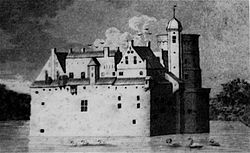
Burg Jennelt no longer stands: it was a fortified house built on a village mound in the municipality of Krummhörn, East Frisia. Nothing of the building itself remains to be seen today, as the last traces were torn down in 1930. The moated site measured 70 by 70 metres and lay right next to the church at the centre of the settlement mound. What remains of interest is mainly the history of the place and the noble families who held it over the centuries.
What to know
- There is no standing building to visit: the burg was completely demolished in 1930.
- The site lies in Jennelt, part of the municipality of Krummhörn in Lower Saxony.
- The former moated mound can still be located next to the village church.
- No opening hours, fees or visitor facilities exist, since no monument remains standing.
Where this château is
Krummhörn · Landkreis Aurich · Niedersachsen
Loading the map…
This châteauChâteaux within 40 km
Address
26736 Krummhörn
Directions open from wherever you are, by car or public transport.
- Heritage status
- Protection status unknown
Base map © IGN, Géoplateforme
Frequently asked
- Can Burg Jennelt still be visited today?
- No, the building was torn down in 1930, and only the site of the former moated mound near the Jennelt church remains.
- Where was Burg Jennelt located?
- It stood in the village of Jennelt, part of the municipality of Krummhörn in the Landkreis Aurich, Lower Saxony.
- Who owned Burg Jennelt?
- Lords of the manor included the Manninga family, then the von Ewsum family, and later the Innhausen und Kniphausen family, who rebuilt the stone house in the 16th century.
- What remains of Burg Jennelt today?
- No visible structure survives; only the outline of the former 70 by 70 metre moated site next to the church can still be traced.
Something wrong here?
Tell us. Every report moves this entry up our verification queue.
Sources
Identity, location and official references from Wikidata and the Land's heritage lists.