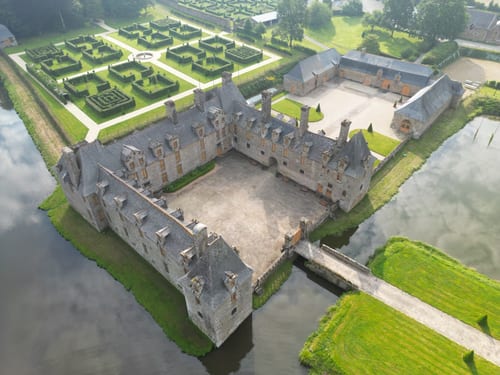
Manoir à l'Evêque
Saint-Malo
Access
No visits on recordNo opening hours or ticketing found
- Where
- Saint-Malo
To make a day of it
Open within 20 km
Manoir à l'Evêque stands in Saint-Malo (Ille-et-Vilaine), in the Bretagne region of France. The building is registered as a historic monument (dating recorded in the Mérimée database: first quarter of the 18th century). The building is privately owned and no visits are on record.
The Manoir à l'Evêque is an eighteenth-century manor house built in Saint-Malo to serve as the residence of the local bishop. Constructed in 1727 by Garengeau, an engineer and military officer in the town's service, this medium-sized building exemplifies the restrained architectural style of the period. As the sole survivor of the former Saint-Servan seminary complex, destroyed in the 1960s, it preserves fine interior woodwork and a granite staircase of notable craftsmanship.
What to know
- Access to the interior is not publicly documented: verify opening conditions before visiting, as this is a private building.
- The building has been listed as a historical monument since 1989, protecting its facades, roof, and ground-floor interior decoration.
- The manor exemplifies the compact design typical of Saint-Malo residences from the early eighteenth century.
Where this château is
Saint-Malo · Ille-et-Vilaine · Bretagne
Loading the map…
This châteauChâteaux within 40 km
Address
Saint-Malo, Ille-et-Vilaine
Directions open from wherever you are, by car or public transport.
- Period of construction
- first quarter of the 18th century
Base map © IGN, Géoplateforme
Frequently asked
- Who built the Manoir à l'Evêque?
- The building was erected in 1727 by the chevalier de Garengeau, a military engineer and fortifications officer for Saint-Malo since the late seventeenth century.
- What was its original purpose?
- It served as the residence of the bishop of the Saint-Malo diocese and was part of a large seminary complex destroyed in the 1960s.
- What can be seen today?
- The manor house itself survives with its remarkable granite staircase and fine ground-floor woodwork, while the surrounding seminary buildings and annexes have been demolished.
Something wrong here?
Tell us. Every report moves this entry up our verification queue.
Sources
Identity, location and official references from Wikidata and the Mérimée register.
- This entry in Markdown
- Wikidata Q22927095
- Mérimée PA00090966
Within an hour’s drive
 Solidor TowerSaint-Malo · Ille-et-Vilaine
- Manoir de la GiclaisSaint-Malo · Ille-et-Vilaine
 Château de la Briantais (Briantais Castle)Saint-Malo · Ille-et-Vilaine
 Malouinière de la Basse-FlourieSaint-Malo · Ille-et-Vilaine
 Saint Malo CastleSaint-Malo · Ille-et-Vilaine
 Château de la Ville Huchet (Ville Huchet Castle)Saint-Malo · Ille-et-Vilaine