Château d'Ars
Ars Castle
Lourouer-Saint-Laurent
Access
Not open to visitors
Source: Office de Tourisme Pays George Sand, courriel du 12 octobre 2026
- Where
- Lourouer-Saint-Laurent
To make a day of it
Open within 20 km
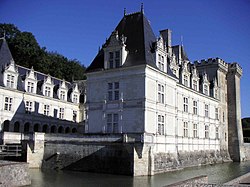
Château d'Ars stands in Lourouer-Saint-Laurent (Indre), in the Centre-Val de Loire region of France. The building is registered as a historic monument (dating recorded in the Mérimée database: 14th century, 16th century). The building is not open to visitors.
In Lourouer-Saint-Laurent, in the Indre department, the château d'Ars raises its turrets on a terrace overlooking the valley, built in the 14th century and later altered during the Renaissance. Its literary fame comes from George Sand, a neighbour and friend of the Papet family, who set scenes from her novel Les beaux messieurs de Bois-Doré there. Owned by the town of La Châtre since 1980, the site now hosts temporary exhibitions and events in its park.
Written from Château d'Ars (Indre)
Where this château is
Lourouer-Saint-Laurent · Indre · Centre-Val de Loire
Loading the map…
This châteauChâteaux within 40 km
Address
Ars, 36400 Lourouer-Saint-Laurent
Directions open from wherever you are, by car or public transport.
The safest check before setting off: today’s hours, guided-tour availability, where to park.
4.6 / 5from 350 Google reviews
- Period of construction
- 14th century, 16th century
Base map © IGN, Géoplateforme
In pictures
Something wrong here?
Tell us. Every report moves this entry up our verification queue.
Sources
Identity, location and official references from Wikidata and the Mérimée register.
- This entry in Markdown
- Wikidata Q2968132
- Mérimée PA00097378
Within an hour’s drive
 Château de La Châtre (Châtre Castle)La Châtre · Indre
 House of George SandNohant-Vic · Indre
- Château de Cosnay (Cosnay Castle)Lacs · Indre
- Château de la Pouzerie (Pouzerie Castle)Thevet-Saint-Julien · Indre
 Château de Montveillé (Montveillé Castle)Briantes · Indre
 Château de Briantes (Briantes Castle)Briantes · Indre