Ölsburg
Ilsede
Access
No visits on recordNo opening hours or ticketing found
- Where
- Ilsede
To make a day of it
Ölsburg stands in Ilsede (Landkreis Peine), in Lower Saxony, Germany. No visits are on record for this building.
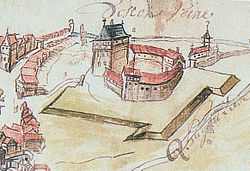
The Ölsburg is a former medieval stronghold, now vanished, located in the hamlet of the same name within the municipality of Ilsede. Nothing of the structure stands today: excavations uncovered a circular ditch roughly 100 metres across, filled in over the centuries, and a rampart wall dated to the first half of the 10th century. The site later housed a collegiate chapter and its church of St Caecilia, both demolished between the 18th and 19th centuries. A visit here means exploring a historic ground rather than a standing building.
What to know
- No standing structure remains on site, only the terrain's shape hints at the former stronghold.
- The site lies in the hamlet of Ölsburg, part of the municipality of Ilsede in Lower Saxony.
- Major archaeological finds, including a 10th-century wall, came from excavations in 2016 and 2021.
- No opening hours, fees or organised access are documented, so a visit amounts to a free walk through the surrounding landscape.
Where this château is
Ilsede · Landkreis Peine · Niedersachsen
Loading the map…
This châteauChâteaux within 40 km
Address
31241 Ilsede
Directions open from wherever you are, by car or public transport.
- Heritage status
- Protection status unknown
Base map © IGN, Géoplateforme
Frequently asked
- Can the Ölsburg still be seen today?
- No, no structure has survived, only the outline of the former ditch remains visible in the landscape.
- Where is the Ölsburg located?
- In the hamlet of Ölsburg, part of the municipality of Ilsede, in the Landkreis Peine in Lower Saxony.
- How old is the Ölsburg?
- Excavations in 2021 showed it already existed in the 10th century, with a rampart wall built in the first half of that century.
- What happened to the site after the stronghold was abandoned?
- It later housed a collegiate chapter and a church, St Caecilia, both demolished between the 18th and 19th centuries.
Something wrong here?
Tell us. Every report moves this entry up our verification queue.
Sources
Identity, location and official references from Wikidata and the Land's heritage lists.