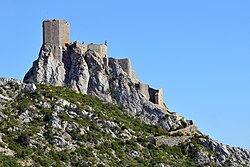
Château de Saint-Pierre-des-Clars
Montredon-des-Corbières
Visit
Hours to be confirmed
- Where
- Montredon-des-Corbières
Hours and prices not verified at the source yet.
To make a day of it
Château de Saint-Pierre-des-Clars stands in Montredon-des-Corbières (Aude), in the Occitanie region of France. Its opening hours and prices have not been verified at the source yet.
On a hilltop in the Corbières overlooking the plain, the ruins of the château de Saint-Pierre-des-Clars form an almost circular enclosure around a watchtower. Built around the 10th century to oversee the surrounding land and shelter livestock, the structure was never a noble residence but a defensive outpost, dismantled in the 16th century during the Wars of Religion. Visitors come for the surviving herringbone stonework and the square tower, whose remains still show the start of a vault.
Written from Château de Saint-Pierre-des-Clars
Where this château is
Montredon-des-Corbières · Aude · Occitanie
Loading the map…
This châteauChâteaux within 40 km
Address
11100 Montredon-des-Corbières
Directions open from wherever you are, by car or public transport.
4.1 / 5from 33 Google reviews
- Heritage status
- Protection status unknown
Base map © IGN, Géoplateforme
Itineraries
In pictures
Frequently asked
- Is the château de Saint-Pierre-des-Clars inhabited or a ruin?
- It is a ruin, only the enclosure wall and the tower remain visible, the interior holds no building.
- Where is the château de Saint-Pierre-des-Clars located?
- On a hilltop in the commune of Montredon-des-Corbières, in the Aude department, near the D613 road.
- What is the origin of the château?
- A chapel is first mentioned there in 978, and the château itself was likely built around the 10th century, owned by the viscount of Narbonne.
- Why was the château destroyed?
- It was dismantled in 1565 at the request of the city of Narbonne, which feared for its own safety during the Wars of Religion.
Something wrong here?
Tell us. Every report moves this entry up our verification queue.
Sources
Identity, location and official references from Wikidata and the Mérimée register.