Château Bijou
Bijou Castle
Labastide-Villefranche
Access
No visits on recordNo opening hours or ticketing found
- Where
- Labastide-Villefranche
To make a day of it
Open within 20 km
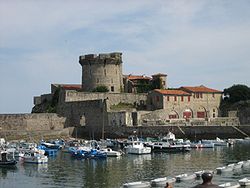
Château Bijou stands in Labastide-Villefranche (Pyrénées-Atlantiques), in the Nouvelle-Aquitaine region of France. The building is listed as a historic monument (dating recorded in the Mérimée database: third quarter of the 18th century, first quarter of the 20th century). The building is privately owned and no visits are on record.
Château Bijou, built in the third quarter of the eighteenth century in Labastide-Villefranche, is an estate listed as a historical monument since 2008. Between 1913 and 1924, the property underwent radical transformation: landscape architect Jules Vacherot and architect Régin redesigned the grounds with formal gardens, parterres and ornamental ponds, while a Romanesque cloister and ancillary structures were added. Today, partly under restoration, the estate comprises the château, its chapel, period gardens, its lake and historic landscape features.
What to know
- The site includes several buildings: the château, a chapel, an early twentieth-century cloister, a boathouse by the lake, and outbuildings including an orangery and greenhouses.
- The estate encompasses substantial grounds with formal gardens, parterres, a Hispanic-Moorish garden and a hornbeam avenue, as well as a lake.
- The property fell into abandonment after the Second World War; conservation and restoration work is ongoing.
Where this château is
Labastide-Villefranche · Pyrénées-Atlantiques · Nouvelle-Aquitaine
Loading the map…
This châteauChâteaux within 40 km
Address
64270 Labastide-Villefranche
Directions open from wherever you are, by car or public transport.
4.5 / 5from 4 Google reviews
- Period of construction
- third quarter of the 18th century, first quarter of the 20th century
Base map © IGN, Géoplateforme
Frequently asked
- When was Château Bijou transformed ?
- The estate was entirely redesigned between 1913 and 1924 under landscape architect Jules Vacherot and architect Régin, who created the formal gardens, cloister and current layout.
- Who designed the gardens at Château Bijou ?
- Landscape architect Jules Vacherot designed the gardens, assisted by landscape architect André Riousse, while architect Régin oversaw the villa's transformation and supervised the construction of the Romanesque cloister.
- Which buildings and features at Château Bijou are protected ?
- The château, chapel, cloister, park, gardens, lake, boathouse and freshwater reservoir are all included in the historical monument listing since 2008.
Something wrong here?
Tell us. Every report moves this entry up our verification queue.
Sources
Identity, location and official references from Wikidata and the Mérimée register.
- This entry in Markdown
- Wikidata Q22997654
- Mérimée PA64000059
Within an hour’s drive
- Château de Cassaber (Cassaber Castle)Carresse-Cassaber · Pyrénées-Atlantiques
 Château de Saint-Pé (Saint-Pé Castle)Salies-de-Béarn · Pyrénées-Atlantiques
 Restes du château de MontréalSauveterre-de-Béarn · Pyrénées-Atlantiques
 Château Gaston Fébus (Gaston Fébus Castle)Sauveterre-de-Béarn · Pyrénées-Atlantiques
- Château de Lahontan (Lahontan Castle)Lahontan · Pyrénées-Atlantiques
 Château de Camou (Camou Castle)Aïcirits-Camou-Suhast · Pyrénées-Atlantiques