Burg Rockenstuhl
Rockenstuhl Castle
Schleid
Access
No visits on recordNo opening hours or ticketing found
- Where
- Schleid
To make a day of it
Burg Rockenstuhl stands in Schleid (Wartburgkreis), in Thuringia, Germany. No visits are on record for this building.
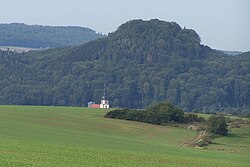
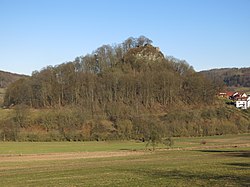
Burg Rockenstuhl is the ruin of a former hilltop castle crowning a basalt cone in the Thuringian Rhön, near Schleid in the Wartburgkreis district. Built in the 12th century by Fulda Abbey, it later served as an administrative seat and a refuge for nearby villagers until it was destroyed, reportedly by fire or lightning, in 1699. Only scant wall remains survive on site, while artefacts recovered from excavations are displayed at the local heritage museum in Geisa.
What to know
- The site sits atop a basalt cone, so reaching it involves a climb on foot.
- Only scant wall remains survive, not an intact building.
- Artefacts found during excavations are displayed at the Geisa museum, about five kilometres away.
- No opening hours, fees or access details are available for this site.
Where this château is
Schleid · Wartburgkreis · Thüringen
Loading the map…
This châteauChâteaux within 40 km
Address
36419 Schleid
Directions open from wherever you are, by car or public transport.
4.9 / 5from 8 Google reviews
- Heritage status
- Protection status unknown
Base map © IGN, Géoplateforme
In pictures
Frequently asked
- What remains of Burg Rockenstuhl today?
- Only scant wall remains survive, as the castle was reportedly destroyed in 1699 by fire or lightning.
- Who built Burg Rockenstuhl?
- It was erected in the 12th century by Fulda Abbey, which later granted it as a fief to the lords of Rockenstuhl.
- Where is Burg Rockenstuhl located?
- It stands on a basalt cone in the Thuringian Rhön, near Schleid in the Wartburgkreis district.
- Can artefacts from the castle be seen anywhere?
- Finds recovered from excavations and construction work are on display at the local museum in Geisa.
Something wrong here?
Tell us. Every report moves this entry up our verification queue.
Sources
Identity, location and official references from Wikidata and the Land's heritage lists.