Tönning Castle
Tönning
Access
No visits on recordNo opening hours or ticketing found
- Where
- Tönning
To make a day of it
Open within 20 km
Tönninger Schloss stands in Tönning (Kreis Nordfriesland), in Schleswig-Holstein, Germany. Recorded dating: 16th century. No visits are on record for this building.
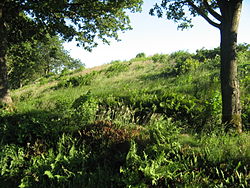
Tönning Castle stood in the town of Tönning in Schleswig-Holstein from 1583 until its demolition in 1735, ordered by the Danish king. Built for Duke Adolf of Schleswig-Holstein-Gottorf, it had four corner pavilions topped with towers and was considered the most elaborate castle on the duchy's west coast. Nothing of the building itself remains today, apart from four sandstone carvings that once framed a doorway, depicting Venus and Mercury. The town park now covering the former castle grounds and garden still reflects the site's original layout.
What to know
- The castle itself has not existed since 1735, so there is no historic building left to visit on site.
- The four surviving sandstone carvings are preserved, under cover, in Tönning's castle park.
- A simplified replica of the castle stands by the park's duck pond, and another can be seen on a roundabout at the town's entrance.
- A visit amounts mainly to a walk through the public park laid out on the former castle and garden grounds.
- No opening hours or admission fees apply, as this is an open, public outdoor site.
Where this château is
Tönning · Kreis Nordfriesland · Schleswig-Holstein
Loading the map…
This châteauChâteaux within 40 km
Address
Johann-Adolf-Straße 39, 25832 Tönning
Directions open from wherever you are, by car or public transport.
4.0 / 5from 4 Google reviews
- Heritage status
- Protection status unknown
- Period of construction
- 16th century
Base map © IGN, Géoplateforme
In pictures
Something wrong here?
Tell us. Every report moves this entry up our verification queue.
Sources
Identity, location and official references from Wikidata and the Land's heritage lists.