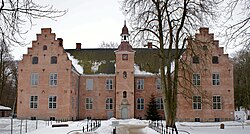
Kiel Castle
Kiel
Access
No visits on recordNo opening hours or ticketing found
- Where
- Kiel
To make a day of it
Sleep nearby
Kieler Schloss stands in Kiel (Kiel), in Schleswig-Holstein, Germany. No visits are on record for this building.
Kiel Castle stands beside the Kleiner Kiel on the site of a medieval stronghold founded around 1242 by Count Adolf von Schauenburg to guard the newly created town of Kiel. Used as a secondary residence by the dukes of Holstein-Gottorf, it became their main seat for half a century from 1721, and it was here that the future Tsar Peter III was born in 1728. Largely destroyed in an air raid in January 1944, the complex seen today is mostly a post-war reconstruction, now home to a cultural centre and a concert hall.
Written from Kiel Castle
What to know
- The building seen today is largely a 1960s reconstruction, since the 1944 fire destroyed the historic structure down to its foundations.
- The site now houses a cultural centre, a concert hall and a regional NDR studio rather than offering a traditional castle visit.
- No opening hours, admission fees or accessibility details are available for a heritage-style visit.
- The place is best approached through its history and surroundings, alongside the cultural events regularly held there.
Where this château is
Kiel · Kiel · Schleswig-Holstein
Loading the map…
This châteauChâteaux within 40 km
Address
Kiel, Kiel
Directions open from wherever you are, by car or public transport.
- Heritage status
- Protection status unknown
Base map © IGN, Géoplateforme
In pictures
Frequently asked
- Can Kiel Castle be visited as a historic castle?
- No, the current building houses a cultural centre and concert hall, as the original castle was destroyed in 1944.
- Who founded Kiel Castle?
- The first stronghold was built around 1242 by Count Adolf von Schauenburg, founder of the town of Kiel.
- Why is Kiel Castle historically significant?
- It served as the main residence of the dukes of Holstein-Gottorf from 1721 and was the birthplace of the future Tsar Peter III in 1728.
- What remains of the original building?
- Very little, as the fire following the January 1944 air raid destroyed the structure down to its foundations, and today's building dates from the 1960s.
Something wrong here?
Tell us. Every report moves this entry up our verification queue.
Sources
Identity, location and official references from Wikidata and the Land's heritage lists.